
A Gift of Security
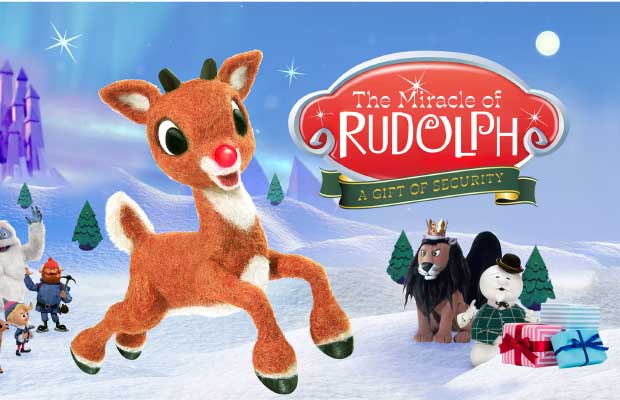
Before Rudolph, Santa had managed his Christmas Eve deliveries with eight perfectly respectable reindeer with no problems. Dasher, Dancer, Prancer, Vixen, and the rest of the crew got the job done for more than a century. Then, in 1939, a Chicago department store decided it needed something new to give away to children, and Christmas would never be quite the same.
Montgomery Ward had traditionally handed out coloring books during the holidays. That year, executives decided to create a story of their own and assigned the job to Robert L. May, a 34-year-old advertising copywriter.
May drew inspiration from The Ugly Duckling, imagining a young reindeer teased for his unusual appearance. The name took some thought. He considered Rollo and Reginald before settling on Rudolph. “Reginald the Red-Nosed Reindeer” might have worked, but it would have made for a considerably less catchy Christmas song.
Behind this cheerful assignment, however, May was living through a difficult year. His wife was suffering from cancer, medical expenses were piling up, and the couple had a young daughter. When his wife died that summer, May became a single father with no idea what to do next. His supervisor offered to relieve him of the Rudolph project, but May chose to finish it.
It’s a good thing he did. The story struck a chord. Montgomery Ward distributed roughly 2.4 million copies during the 1939 Christmas season. Children fell in love with the little reindeer whose most embarrassing feature turned out to be exactly what Santa needed. There was just one problem for Rudolph’s creator: the character belonged to Montgomery Ward. May had written the story on the job, so its success did little to ease his personal financial struggles.
Then came a remarkable gift.
In 1947, Montgomery Ward transferred the copyright to May. The company gave its employee something that would prove far more valuable than anyone could have imagined: ownership of the character he had created.
Two years later, May’s brother-in-law, Johnny Marks, turned Rudolph’s story into a song made famous by Gene Autry. In 1964, a television special added the Abominable Snowman, Hermey, Yukon Cornelius, and the Island of Misfit Toys to the Christmas tradition. Rudolph had become a celebrity.
More importantly, the rights to May’s creation brought financial security to his family. He reportedly called their home “the house that Rudolph built,” and the income helped pay for his children’s college educations. Years later, the copyright was held by a company formed by his children. Not bad for a department store giveaway.
Of course, very few of us will ever own the rights to a reindeer, a bestselling novel, or a song that plays in every shopping mall between Thanksgiving and Christmas. But the story offers a lesson that applies to nearly every family: what we build during our lives can continue providing for the people we love long after we’re gone. That outcome, however, rarely happens by accident.
Consider what you hope to leave your family. Perhaps it is a home, retirement savings, a small business, or land that has been in the family for generations. The assets may not come with licensing agreements or royalty checks, but they represent years of work and sacrifice.
A good estate plan begins by identifying those assets and deciding who should receive them. It also makes sure the legal pieces fit together. A Will might say one thing, while a beneficiary designation on a retirement account says another. A trust might contain detailed instructions, but it cannot accomplish its purpose with property that was never properly transferred into it.
And passing along an inheritance is not always as simple as dividing everything equally. One child might be managing a disability. Another could need help handling money responsibly. A family business might need a plan that allows it to keep operating. Thoughtful planning can address those circumstances instead of leaving loved ones to sort them out during a difficult time.
Just as important, plans need revisiting. Families grow, relationships change, assets are bought and sold, and something modest today can become much more valuable tomorrow. An estate plan should grow and change along with the family it is meant to protect.
There is another reason I love Rudolph’s story at Christmas. Robert May did not set out to create a fortune. He set out to tell a story that would make children happy during a season when his own life held little happiness. Yet that creation eventually helped care for his family and became a tradition shared by millions of others.
Most of us will never leave behind a character as famous as Rudolph. But with thoughtful planning, we can leave something equally meaningful to those closest to us: security, peace of mind, and the comfort of knowing we took care of them. That may be the best gift of all.
At The Elrod Firm, we help families plan for the future and protect what matters most. Visit ElrodFirm.com to schedule a free consultation.





0 comments